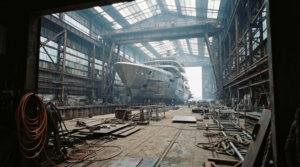
This case study explores the engineering challenges of maintaining vessel stability during integration of new equipment, alternative fuels, and battery systems. It details a comprehensive approach to stability assessments from early design phases through to class approval, emphasizing collaboration and rigorous analysis to meet regulatory and operational requirements.
Maintaining vessel stability during design modifications and conversions presents a complex engineering challenge, particularly as new equipment and alternative fuel systems are integrated. Stability assessments must account for changes in weight distribution and center of gravity to ensure compliance with safety regulations and operational efficiency. This case study examines the approach taken to address these challenges through comprehensive stability evaluations conducted from early design phases through to final documentation.
The process begins with detailed stability assessments covering intact and damage stability, inclining tests, and loading manuals. These assessments are tailored to both new builds and conversions, with stability considerations incorporated from feasibility studies through detailed design. This integration ensures that stability parameters evolve alongside the vessel’s configuration and operational profile, providing a dynamic framework for managing stability throughout the project lifecycle.
A critical aspect arises when vessels undergo modifications such as the installation of alternative fuel systems—methanol, hydrogen, ammonia—or battery hybrid technologies. Each technology introduces unique impacts on vessel weight and center of gravity, necessitating precise recalculations. For example, the addition of battery systems often involves significant weight concentrated in specific compartments, while alternative fuels may require new tank arrangements and associated equipment that alter the vessel’s mass distribution. These factors must be rigorously analyzed to maintain stability margins and comply with classification society requirements.
The engineering approach involves close collaboration between stability specialists and disciplines responsible for arrangement, structural design, and systems integration. Stability findings directly inform design decisions, ensuring that modifications do not compromise vessel safety or performance. Deliverables include damage stability booklets, support for inclining tests, ballast and anti-heeling system assessments, and detailed weight and center-of-gravity management. This comprehensive methodology ensures that stability reassessments accurately reflect the vessel’s actual condition post-modification.
Documentation packages prepared for class approval streamline regulatory processes by providing clear, compliant stability data. Early engagement of stability expertise during design or refit phases allows for risk mitigation and smoother navigation of regulatory requirements. This integrated approach supports naval architects, marine engineers, and shipyards in adapting vessel designs to evolving operational demands without compromising safety.
In summary, addressing the engineering challenges of vessel stability amid integration of new equipment and alternative fuel technologies requires a holistic, iterative process. Stability assessments must be embedded from initial design stages and continuously updated to reflect configuration changes. Through multidisciplinary collaboration and rigorous analysis, stability can be maintained to meet regulatory standards and operational needs in modern vessel projects.