Say goodbye to false alarms and hello to ultimate offshore security with the next generation of smart anchoring systems. Discover how seabed-focused tracking and advanced foredeck hardware are revolutionizing marine safety and vessel automation.
- Smart anchor buoys monitor seabed coordinates directly to eliminate false alarms caused by tidal streams.
- The adoption of 12V electric windlasses has fundamentally transformed anchoring ergonomics on the foredeck.
- Horizontal windlasses are prized for easy maintenance while vertical units conceal the motor below deck.
For marine engineers and naval architects, the fundamental physics of anchoring have long presented an operational paradox. While traditional anchor alarms rely on monitoring the vessel’s perimeter via GPS geo-fencing, these systems frequently suffer from false positives during routine swing movements or fail entirely to register a dragging anchor until the vessel has drifted dangerously close to hazards 1. This limitation forces a strategic re-evaluation of how maritime safety technology interfaces with vessel automation.
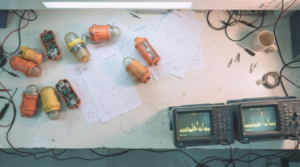
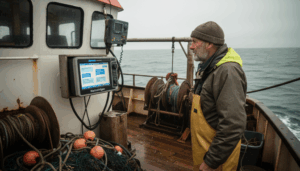
Recent innovations in marine technology seek to resolve this disconnect by shifting the point of reference from the vessel itself directly to the seabed. Emerging smart anchor buoy solutions integrate GPS receivers and microprocessing units within surface markers tethered straight to the ground tackle 1. By monitoring the precise coordinates of the anchor rather than the floating hull, these systems virtually eliminate false alarms caused by wind shifts and tidal streams, providing crew members and captains with accurate, real-time positional data 1.
Simultaneously, the mechanics aboard the foredeck continue to undergo significant refinement. The widespread adoption of 12V electric windlasses has fundamentally transformed anchoring ergonomics 1. Whether selecting horizontal configurations—prized for ease of maintenance in confined deck layouts—or vertical units that conceal the motor below deck for optimal chain routing, modern hardware choices directly impact operational safety and crew workload 1. Integrating reliable components such as chain counters, high-load relays, and precision-engineered gipsies ensures that heavy chain-and-anchor combinations are handled with predictable mechanical efficiency.
For industry professionals, specifying these advanced systems involves careful trade-offs between capital expenditure, deck integration constraints, and the absolute requirement for reliable offshore performance. As client expectations for onboard autonomy and safety rise, incorporating intelligent monitoring devices and robust electric windlasses represents a crucial step forward in yacht design and outfitting.
Evaluate your current vessel specifications and upgrade your anchoring infrastructure to ensure maximum safety and operational reliability during your next build or refit project.