Discover how bacteria, wood, and even flax are revolutionizing construction with eco-friendly strength and smart design. Dive into the future where sustainable materials reshape our buildings, bridges, and steel—lighter, greener, and stronger than ever before!
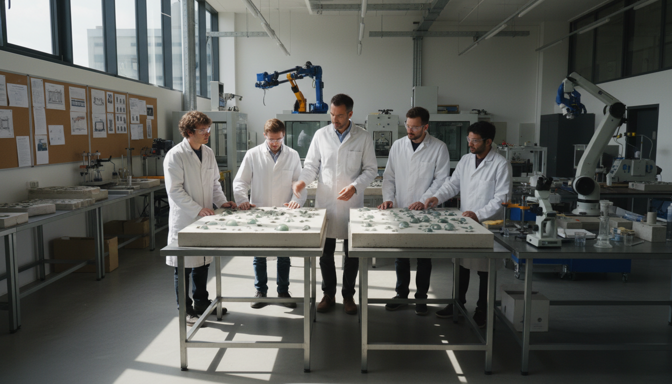
Imagine a world where concrete is not just a heavy, resource-intensive material but a smart, lightweight composite enhanced by nature itself. This vision is becoming reality thanks to pioneering work at the Stuttgart Institute for Lightweight Construction. Lucio Blandini and his team have demonstrated that by embedding hollow spheres within concrete slabs, they can reduce material use and weight by up to 40% without sacrificing strength. This approach not only conserves resources but also challenges long-held assumptions about concrete’s environmental impact.
Looking further ahead, the potential to replace traditional cement with bacteria-produced binders could revolutionize the industry. These bacteria, when combined with calcium chloride and urea—even urine—can produce a solid material akin to concrete in just 48 hours, offering a CO2-free alternative that could drastically cut emissions in construction1.
Wood, too, is stepping into the spotlight as a sustainable building material. The eight-story wooden office building by Kampa in Aalen exemplifies how modern engineering and layered ventilated facades can harness wood’s natural strength and insulation properties while meeting fire safety standards. This project underscores wood’s potential as a renewable resource that can support large-scale construction without the carbon footprint of concrete1.
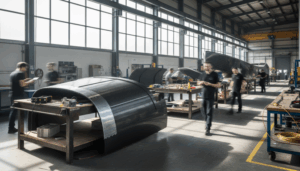
Even flax, an ancient material, is finding new life in innovative applications. The flax bridge in Ulm, reinforced with polymers, weighs a mere 3.9 tons yet supports loads up to 12 tons, tested to 24 tons. Equipped with sensors, it provides real-time data on structural health and is designed to last 50 years, becoming stronger over time and fully recyclable at the end of its life1.
Parallel to these material innovations, the steel industry is evolving. voestalpine has delivered its first CO2-reduced premium steel, produced by partially replacing coke with hydrogen-containing reducing agents and powered increasingly by renewable energy. This steel meets the high standards required for demanding applications like wind turbines and automotive lightweight construction, aligning industrial production with global climate goals2.
Together, these advances signal a transformative shift in marine and construction industries toward sustainability, efficiency, and innovation. For naval engineers and shipbuilders, embracing these materials and technologies could mean lighter, stronger, and greener vessels and infrastructure in the near future.
The time to explore and integrate these emerging materials is now. Industry leaders and professionals must engage with these innovations to drive the marine sector toward a sustainable horizon.