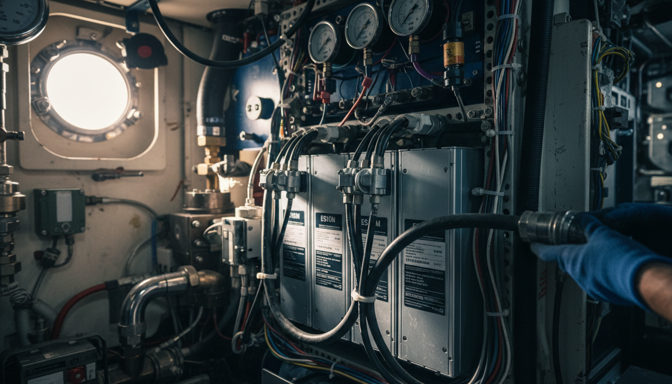
Discover how Formula 1 precision is revolutionizing superyacht energy with Williams Grand Prix Technologies’ groundbreaking ES10M hybrid battery system. Dive into the future of marine power—where speed meets sustainability on the high seas!
Imagine the precision and power of Formula 1 racing technology harnessed to transform energy systems aboard superyachts. Williams Grand Prix Technologies has done just that with the launch of the ES10M, a modular battery system designed specifically for hybrid superyachts, refit projects, and electric support vessels. This innovation marks the company’s first dedicated marine product, aiming to elevate onboard energy efficiency and support alternative propulsion methods.
The ES10M’s roots in Formula 1 racing are no accident. The expertise developed in the high-stakes environment of F1 battery systems is now being adapted to meet the marine sector’s growing demand for hybrid propulsion and efficient energy management. Selin Tur, Managing Director and CTO of Williams Grand Prix Technologies, highlights the timely nature of this development as superyacht builders and refit specialists increasingly seek to reduce emissions and improve energy efficiency 1.
What makes the ES10M particularly compelling is its modular design, which can be tailored to yachts ranging from 50 to over 100 metres. Each module stores 9.8kWh of energy, and complete systems can scale from 39kWh to an impressive 4.2MWh. This flexibility allows the battery to support hybrid propulsion, hotel loads, or fully electric applications for tenders and support vessels, making it a versatile solution for a wide range of motor yachts.
Safety is paramount in marine battery systems, and the ES10M incorporates a layered safety architecture. It uses thermal protection materials, integrated gas management, and an advanced battery management system powered by physics-informed machine learning. This system monitors battery cells in real time, predicts load behavior, and identifies potential faults before they occur. Remote diagnostics further enhance operational safety by allowing offsite monitoring. The battery modules are IP67 rated, and Lloyd’s Register class approval is underway.
This innovation arrives at a pivotal moment as the superyacht industry increasingly embraces hybrid propulsion and alternative energy systems. Complementing such advances, collaborations like that between Alewijnse and the University of Twente are pushing the boundaries of maritime electrification through hardware-in-the-loop (HIL) technology. By integrating academic expertise in power electronics and energy systems with maritime engineering and system integration, these partnerships accelerate the development and validation of electrification solutions for vessels, underscoring a broader industry trend toward smarter, safer, and more efficient energy management 2.
By leveraging Formula 1 battery technology and embracing cutting-edge validation methods, Williams Grand Prix Technologies is positioning itself at the forefront of a rapidly expanding market, offering a scalable, safe, and efficient energy solution tailored to the complex needs of modern superyachts.
For naval engineers, shipyard managers, and marine professionals, the ES10M represents a significant step forward in marrying high-performance engineering with sustainable maritime innovation. As the industry moves toward greener propulsion, such advancements will be critical in shaping the future of luxury yachting.