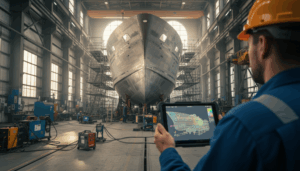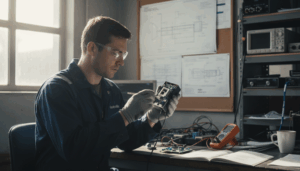
Explore how artificial vision is transforming assembly inspection in marine manufacturing by improving precision, speed, and reliability beyond traditional methods. Learn how advanced imaging and smart sensing technologies are raising quality standards in the demanding shipbuilding industry.
Assembly inspection remains a cornerstone of quality assurance in marine manufacturing, where every component must meet exacting standards before deployment. Traditionally, this critical step relied heavily on manual visual checks, a method increasingly strained by human fatigue, accelerating production lines, and the rising complexity of marine systems that now integrate sophisticated electronics and automation.
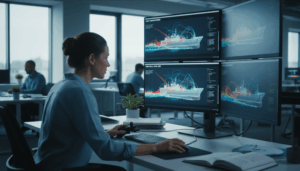
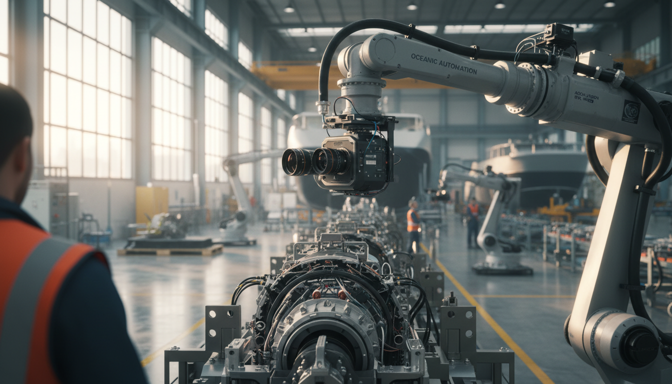
The emergence of Industry 4.0 technologies has catalyzed a shift toward automated inspection, with artificial vision systems at the forefront of this transformation. These systems utilize high-resolution cameras to capture detailed images of assembled parts, which are then scrutinized by advanced algorithms incorporating artificial intelligence and deep learning. This approach enables the detection of defects and assembly errors with remarkable precision and speed, surpassing the consistency achievable by human inspectors.
Unlike manual inspection, artificial vision is impervious to fatigue, ensuring unwavering accuracy while supporting faster throughput. It excels at identifying subtle flaws such as micro-cracks in pressed components, misaligned seat assemblies, or incorrect battery connections—issues that might elude even the most experienced human eye. This capability is particularly vital as marine products grow more complex, blending mechanical, electronic, and digital elements.
Implementing these systems demands strategic focus on critical inspection points, prioritizing areas prone to faults or safety risks. Integration with complementary technologies, such as robotics and environmental sensors, further enhances detection capabilities. For instance, humidity sensors can verify environmental conditions during assembly, ensuring optimal parameters are maintained to prevent latent defects.
Data tracking forms an essential pillar of this approach, linking inspection outcomes to individual products through unique codes or system data. This traceability facilitates swift corrective actions and continuous quality improvement, reducing costly rework and minimizing the risk of recalls.
Innovative companies like Seaweave Ltd, a New Zealand-based technology firm, exemplify this trend by developing rugged, intelligent monitoring systems tailored for marine operations. Their expertise in marine engineering, computer vision, and smart sensing underscores the practical deployment of such technologies in challenging real-world conditions 2.
Moreover, parallels can be drawn from advancements in other complex manufacturing sectors, such as battery production, where digital automation and laser optics are employed to bridge the gap between laboratory perfection and mass production realities. These cross-industry insights highlight the transformative potential of combining artificial vision with digital twins and data analytics to elevate quality control standards 3.
For shipyards and marine equipment manufacturers, embracing artificial vision inspection systems is more than a technological upgrade—it is a strategic investment in operational efficiency, product excellence, and customer trust. As regulatory demands tighten and market competition intensifies, these technologies will be indispensable in sustaining a competitive edge and ensuring the reliability of marine products in increasingly complex environments 1.